Tesla Takes Flight: Elon Musk Unveils Rocket-Powered Roadster That Can Leap, Flip and Fly

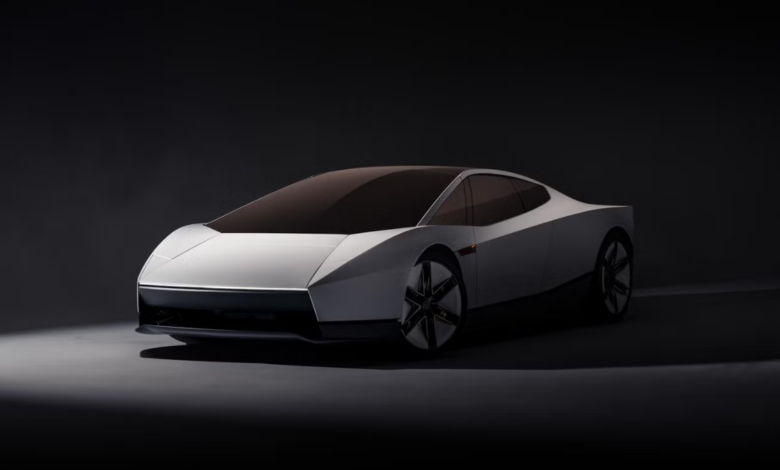
The long-awaited electric supercar uses SpaceX-inspired propulsion technology to perform aerial maneuvers, but questions remain about safety, regulations and whether the vehicle will ever become a practical transportation option.
McGREGOR, Texas — The flying cars once imagined in science-fiction movies may be moving closer to reality. Tesla CEO Elon Musk unveiled a redesigned version of the company’s long-awaited Roadster on Thursday, October 15, demonstrating an electric sports car capable of briefly launching itself into the air, performing aerial maneuvers and landing on its wheels using propulsion technology inspired by Musk’s aerospace company, SpaceX.
The demonstration, held at a SpaceX testing facility in McGregor, Texas, marked one of Tesla’s most ambitious automotive presentations in recent years. Rather than simply introducing another electric vehicle, Musk showcased a machine that challenges conventional expectations of what an automobile can do, combining high-performance engineering, aerodynamic controls and compressed-air thrusters.
According to The Associated Press, the next-generation Roadster uses cold-gas propulsion and a specialized suction system to achieve maneuvers that traditional automobiles cannot perform. However, while Tesla demonstrated impressive airborne capabilities, the technology is not equivalent to sustained aircraft-style flight.
A Dramatic Demonstration That Defied Expectations
During the presentation, Tesla’s prototype accelerated up a steep, curved ramp, using a powerful suction system to remain attached to the surface even while positioned upside down. The vehicle then launched into the air, rotated and used compressed-air thrusters to stabilize itself before landing upright.
In another demonstration, the Roadster propelled itself over a lineup of Tesla vehicles, illustrating how its propulsion system could temporarily lift the car above obstacles. The presentation was conducted without a driver inside the prototype, reflecting the potential risks involved in testing such experimental technology.
As reported by TechCrunch, Tesla also demonstrated extraordinary acceleration, with the Roadster reportedly reaching 60 miles per hour from a standstill in approximately one second.
The dramatic performance underscored Musk’s longstanding interest in combining automotive and aerospace engineering. Nevertheless, the demonstration established the vehicle’s ability to execute controlled airborne maneuvers rather than proving that it could travel through the skies like a conventional aircraft.
SpaceX Technology Meets Electric Transportation
Unlike traditional aircraft, which depend on wings, propellers or jet engines to maintain flight, Tesla’s prototype relies on high-pressure compressed air released through strategically positioned thrusters. The resulting force can briefly propel the vehicle upward, assist with rotation and help control its descent.
The Roadster also incorporates advanced aerodynamic features and suction technology designed to improve traction and stability. These systems could potentially benefit the vehicle’s performance on racing tracks, even if its airborne capabilities never become available for everyday driving.
The technology represents a significant departure from conventional electric-vehicle development, which has generally concentrated on battery efficiency, driving range, charging infrastructure and autonomous operation.
Tesla’s approach instead focuses on demonstrating the extreme capabilities possible when automotive engineering is combined with aerospace-inspired systems.
From a 2017 Promise to a 2026 Unveiling
The next-generation Roadster was originally introduced in November 2017, when Musk promised an electric sports car capable of exceptional acceleration and a driving range that would challenge traditional gasoline-powered supercars.
However, the project experienced repeated production delays as Tesla concentrated on expanding its vehicle lineup, developing autonomous-driving technology and investing in new manufacturing capabilities.
Thursday’s demonstration provided the most substantial public display yet of the redesigned Roadster’s unusual capabilities. According to Car and Driver, the presentation arrived nearly nine years after Tesla first introduced the second-generation vehicle concept.
Musk now says production is expected to begin in 2028. That timetable remains a company projection, however, rather than a confirmed delivery date, and Tesla has not announced a definitive final selling price for the redesigned vehicle.
Can Tesla’s Flying Roadster Become Street Legal?
Despite the attention generated by the demonstration, significant questions remain about whether the vehicle’s airborne capabilities could ever be legally operated on public streets.
Existing automotive safety regulations are designed around vehicles maintaining contact with the roadway. A car capable of intentionally launching itself into the air introduces new concerns involving pedestrian safety, collision risks, insurance coverage and potential aviation oversight.
Even brief airborne movements could create dangerous situations in congested urban environments, particularly if the vehicle were operated near pedestrians, buildings or other moving automobiles.
There are also engineering challenges involving the weight of compressed-air equipment, how frequently the propulsion system could be activated and whether the system could maintain safe control under unpredictable conditions.
As CBS News reported, technical difficulties and regulatory obstacles have historically prevented flying-car concepts from developing into widespread transportation solutions.
For now, Tesla has not demonstrated that the Roadster can sustain extended flight, nor has the company established that its airborne functions will be approved for routine public-road use.
A Marketing Spectacle or a Transportation Breakthrough?
The unveiling arrives as Tesla faces growing competition in the electric-vehicle industry and continues expanding its ambitions in robotics, autonomous transportation and artificial intelligence.
For Tesla, the Roadster serves a purpose beyond traditional automobile sales. The high-performance sports car also represents a showcase for the company’s engineering capabilities and its ability to attract public attention through unconventional technological development.
However, the commercial potential of a vehicle capable of performing aerial stunts remains uncertain. Developing a practical transportation system would require additional testing, independent performance verification, safety certification and a regulatory framework governing its operation.
The Roadster could ultimately become an exclusive performance vehicle rather than a practical solution to traffic congestion or everyday transportation needs.
Still, the demonstration illustrated a potentially important step in the evolution of automotive technology. Concepts that once existed primarily in futuristic entertainment are increasingly being explored through real-world engineering.
The Future of Driving May Look Very Different
Flying automobiles have captured the public imagination for generations, from animated television programs to Hollywood films depicting highways suspended above futuristic cities.
Tesla’s new Roadster does not yet deliver that vision. It cannot be considered a replacement for airplanes, helicopters or conventional automobiles, and its demonstrated airborne capabilities are limited to brief, controlled maneuvers.
Nevertheless, the company’s latest presentation raises questions about how far automotive manufacturers may eventually push the boundaries between ground transportation and aerospace technology.
Whether Tesla’s experimental Roadster becomes a revolutionary production vehicle or remains an extraordinary engineering showcase, its unveiling has reopened the conversation about what the automobile of tomorrow might look like.
For an industry already transforming through electrification and automation, the possibility of cars that can momentarily leave the road introduces another dimension to the future of mobility.